
One of the first decisions is whether to choose a tethered or untethered charger.
A tethered charger has a charging cable permanently attached, making it convenient for everyday charging. Simply park, plug in and charge.
An untethered charger has a socket instead of a fixed cable. You use the cable that came with your vehicle, giving a tidier appearance and greater flexibility if you change car in the future.
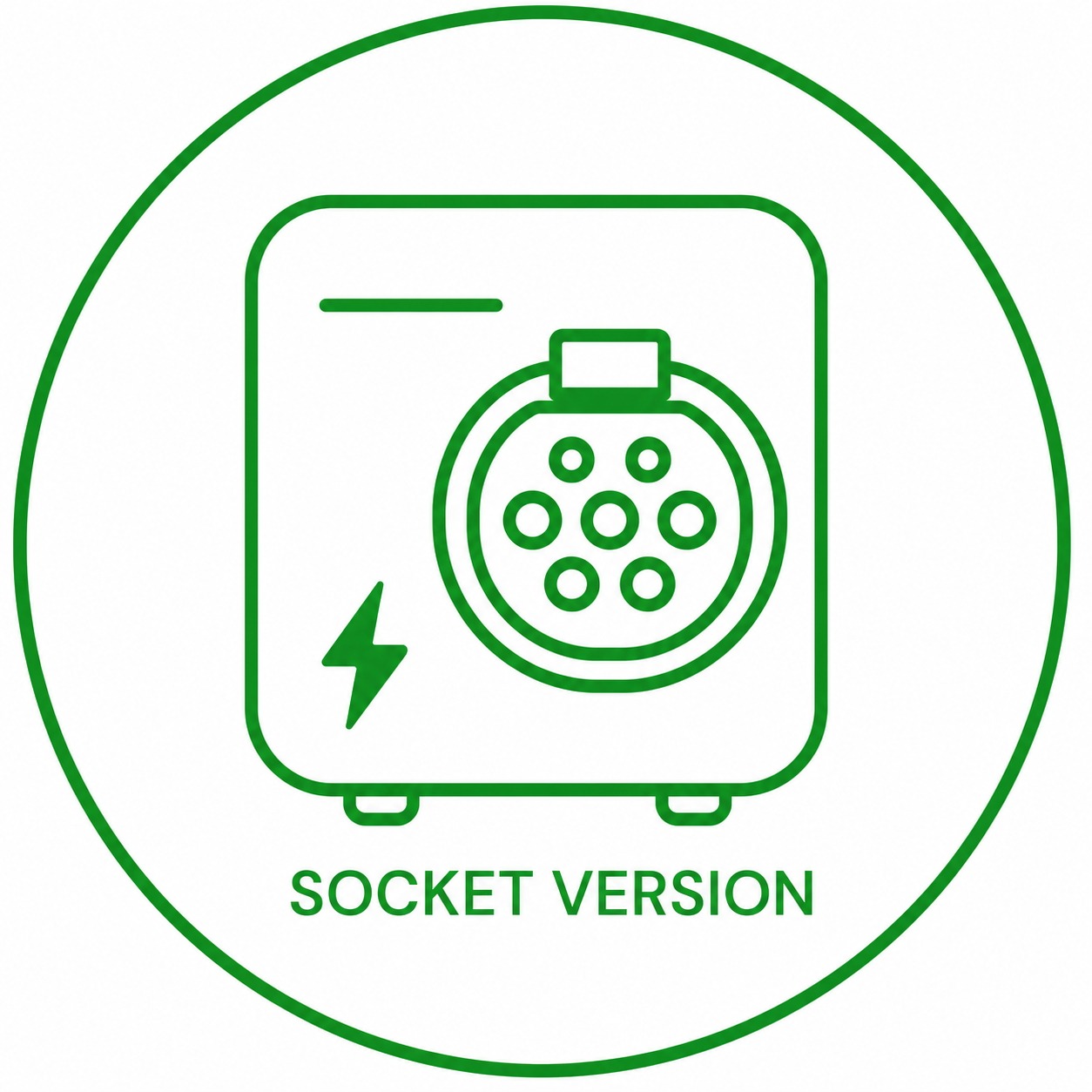
Untethered (Socket)
You plug in your own cable, which stays in the boot and travels with you.
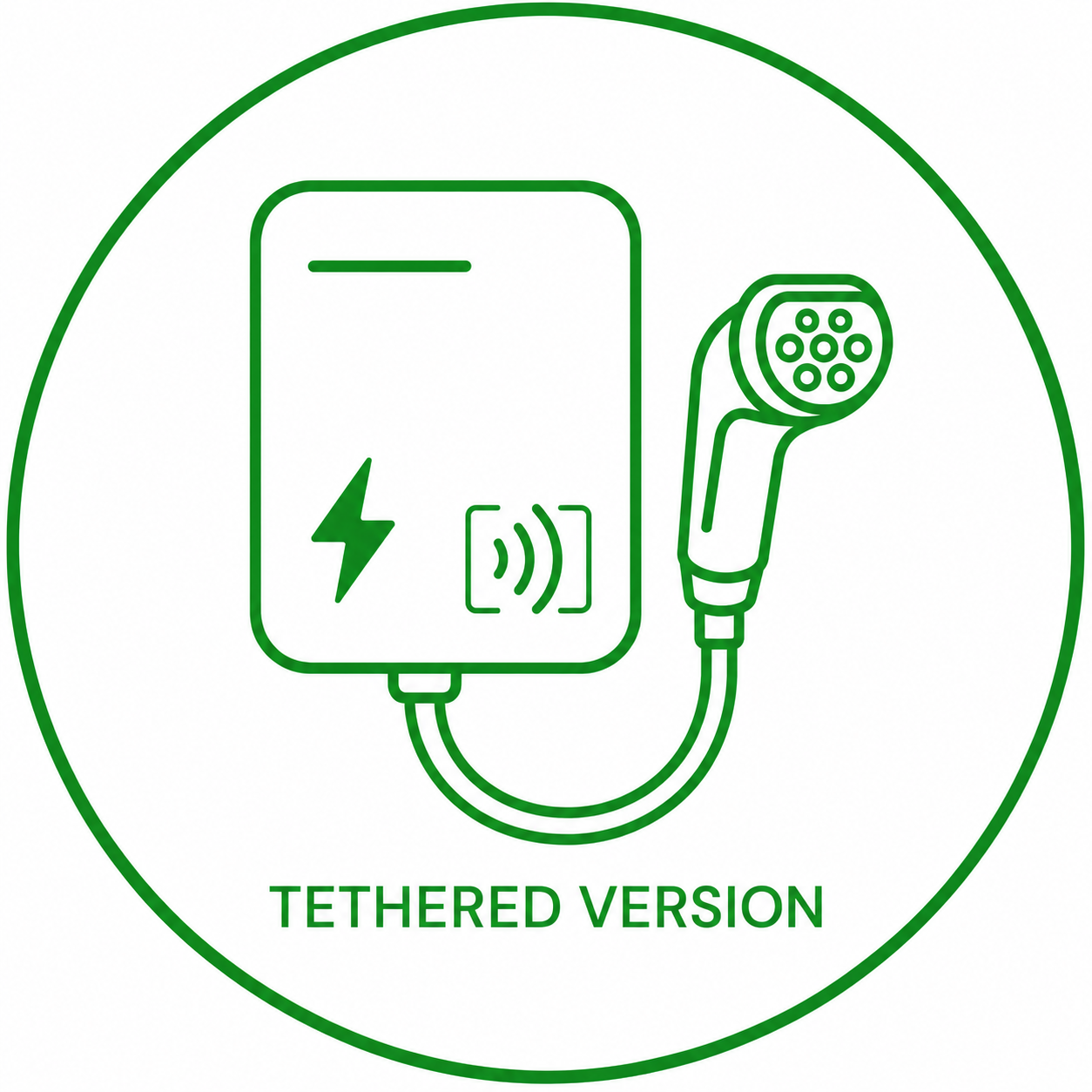
Tethered
The cable is permanently attached — park, unwind, plug in.
Neither option is better than the other — it comes down to personal preference and how you intend to use your charger.
Most chargers sold in the UK are now smart chargers.
A smart charger connects to your home Wi-Fi or mobile network, allowing you to control charging through a smartphone app.
Common smart features include:
• Scheduled charging.
• Off-peak tariff charging.
• Remote start and stop.
• Charging history.
• Energy monitoring.
• Software updates.
• Load balancing.
• Solar integration on compatible models.
These features can significantly reduce charging costs while giving you greater control over your electricity usage.
Several manufacturers produce excellent EV chargers, each offering different strengths.
Hypervolt is known for its stylish appearance and user-friendly app.
Ohme chargers are particularly popular with drivers using smart electricity tariffs thanks to their advanced tariff integration.
myenergi Zappi is an excellent choice for homes with solar panels, offering advanced renewable energy charging modes.
Easee One is compact, discreet and highly flexible.
Wallbox Pulsar Max combines a small design with powerful smart features.
Andersen chargers are designed to blend into premium homes with concealed cable storage and a wide range of finishes.
The best charger isn’t necessarily the most expensive—it’s the one that best matches your vehicle and your lifestyle.
If you already have solar panels or plan to install them in the future, choosing a charger with solar charging capability can help maximise the use of your renewable energy.
Solar-compatible chargers can automatically divert surplus solar generation into your vehicle, reducing the amount of electricity imported from the grid.
Not every homeowner needs this feature, but it can be an excellent investment for households generating their own electricity.
Most UK homes have a single-phase electricity supply, making a 7kW charger the practical choice.
A 22kW charger requires a three-phase electrical supply, which is generally only available at some commercial premises and a small number of residential properties.
For most homeowners, a 7kW charger provides more than enough charging speed for overnight charging.
Almost all modern electric vehicles sold in the UK use the Type 2 charging connector for home charging.
This means most chargers are compatible with virtually every modern EV, including Tesla, BMW, Audi, Volkswagen, Hyundai, Kia, Nissan, Volvo, Mercedes-Benz, MG, BYD and many others.
The differences between chargers are usually found in their software, smart features and design rather than vehicle compatibility.
Technology continues to evolve, so it’s sensible to think about future requirements when choosing an EV charger.
You may wish to consider solar compatibility, battery storage integration, dynamic load balancing or additional charging capacity if you expect to own multiple electric vehicles.
Selecting a charger with regular software updates and strong manufacturer support helps ensure your charger remains useful for many years.
With so many chargers available, choosing the right model can feel confusing.
Rather than recommending a single brand for every customer, we take the time to understand your vehicle, driving habits, property and future plans before making a recommendation.
Whether you’re looking for the best value, premium design, advanced smart features or solar integration, we’ll recommend the charger that best suits your individual needs rather than simply selling the most expensive option.